
Multi-scale Climate Mitigation Pathways
-
Impacts of COVID-19 and fiscal stimuli on global emissions and the Paris Agreement
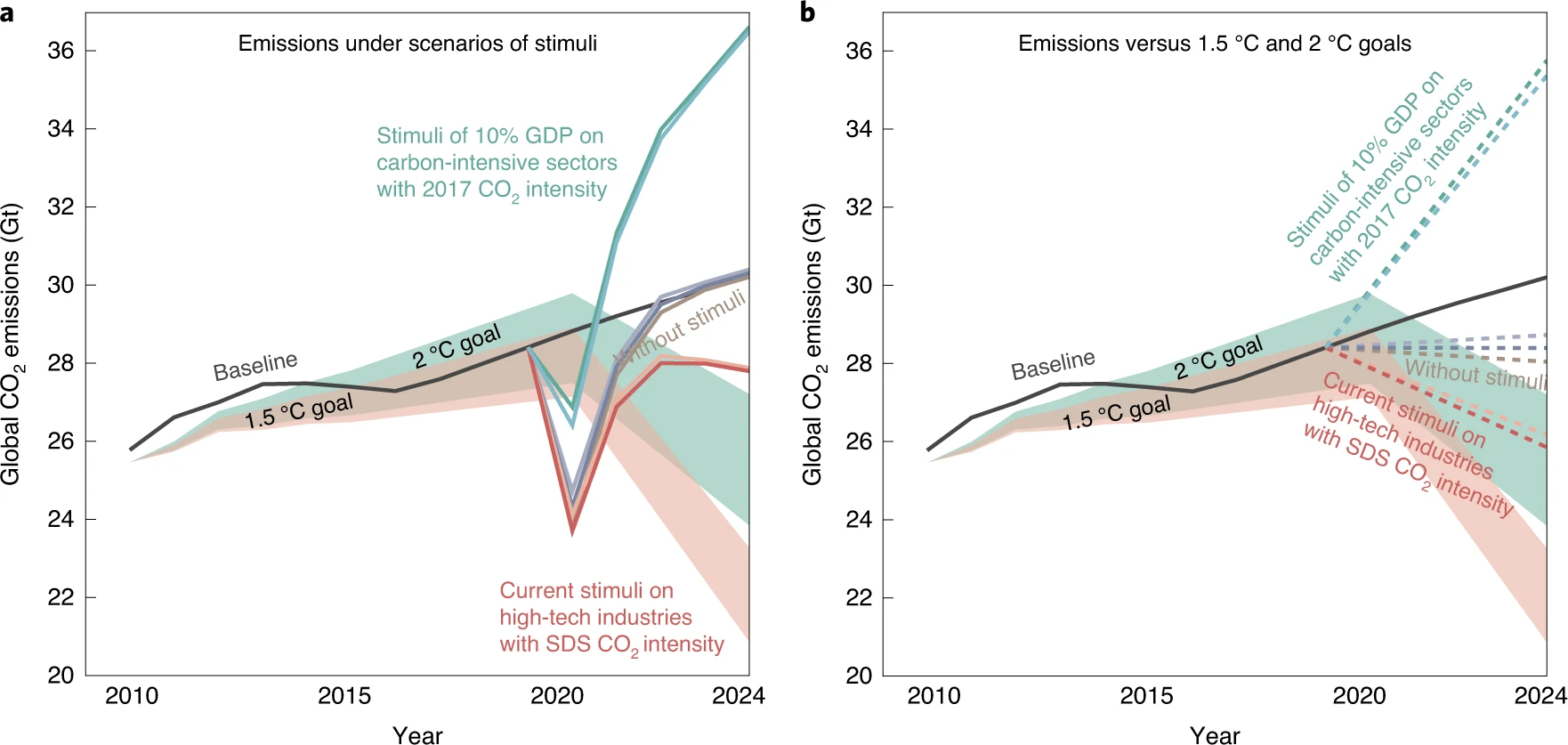
The global economy is facing a serious recession due to COVID-19, with implications for CO2 emissions. Here, using a global adaptive multiregional input–output model and scenarios of lockdown and fiscal counter measures, we show that global emissions from economic sectors will decrease by 3.9 to 5.6% in 5 years (2020 to 2024) compared with a no-pandemic baseline scenario (business as usual for economic growth and carbon intensity dec...
-
Enlarging Regional Disparities in Energy Intensity within China
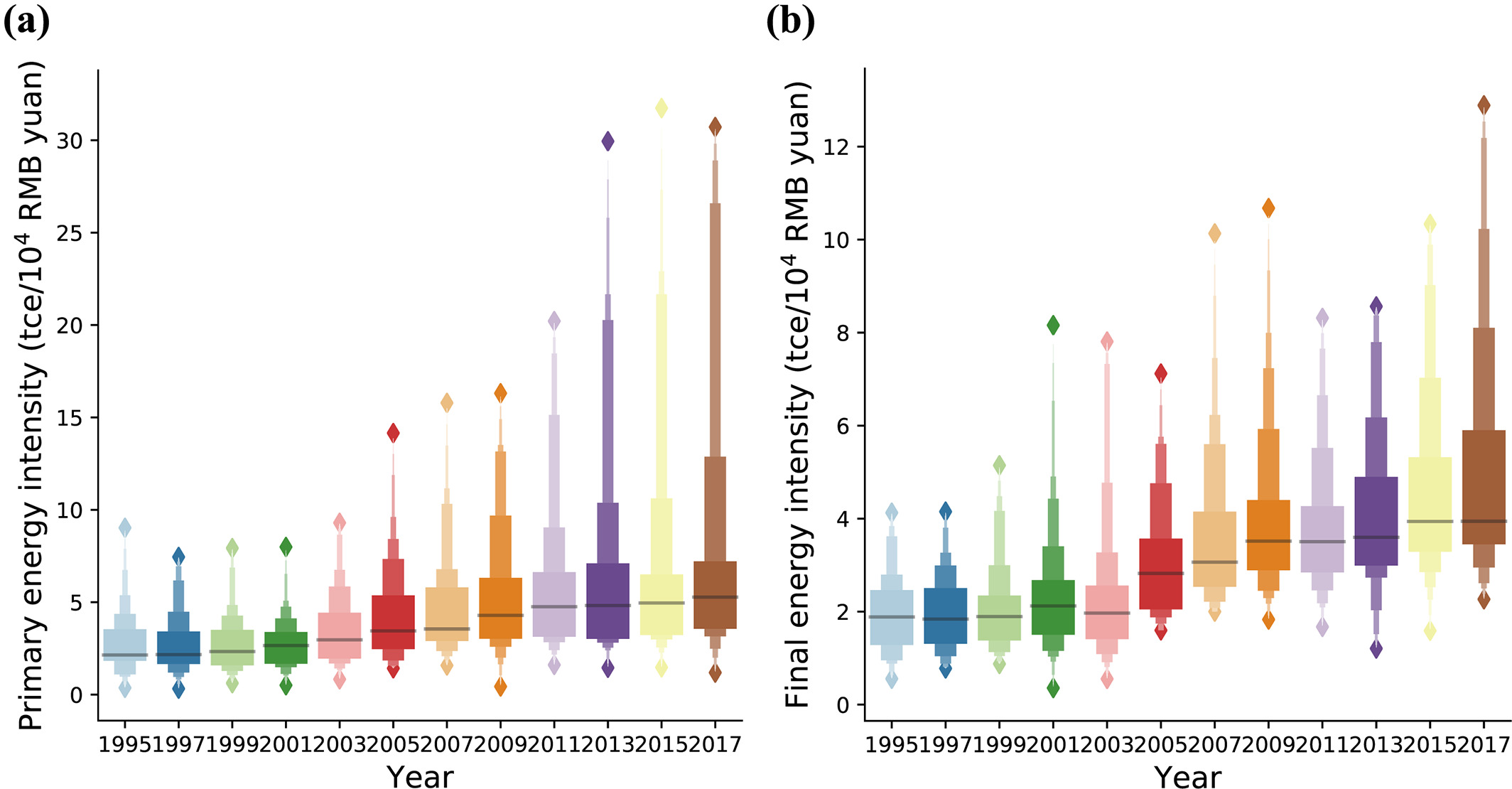
As energy saving and emission reduction become a global action, the disparity in energy intensity between different regions is a new rising problem that stems a country's or region's energy-saving potential. Here we collect China's provincial panel data (1995–2017) of primary and final energy consumption to evaluate China's unequal and polarized regional pattern in energy intensity, decompose the inequality index into contributing com...
-
Dynamic driving forces of India's emissions from production and consumption perspectives
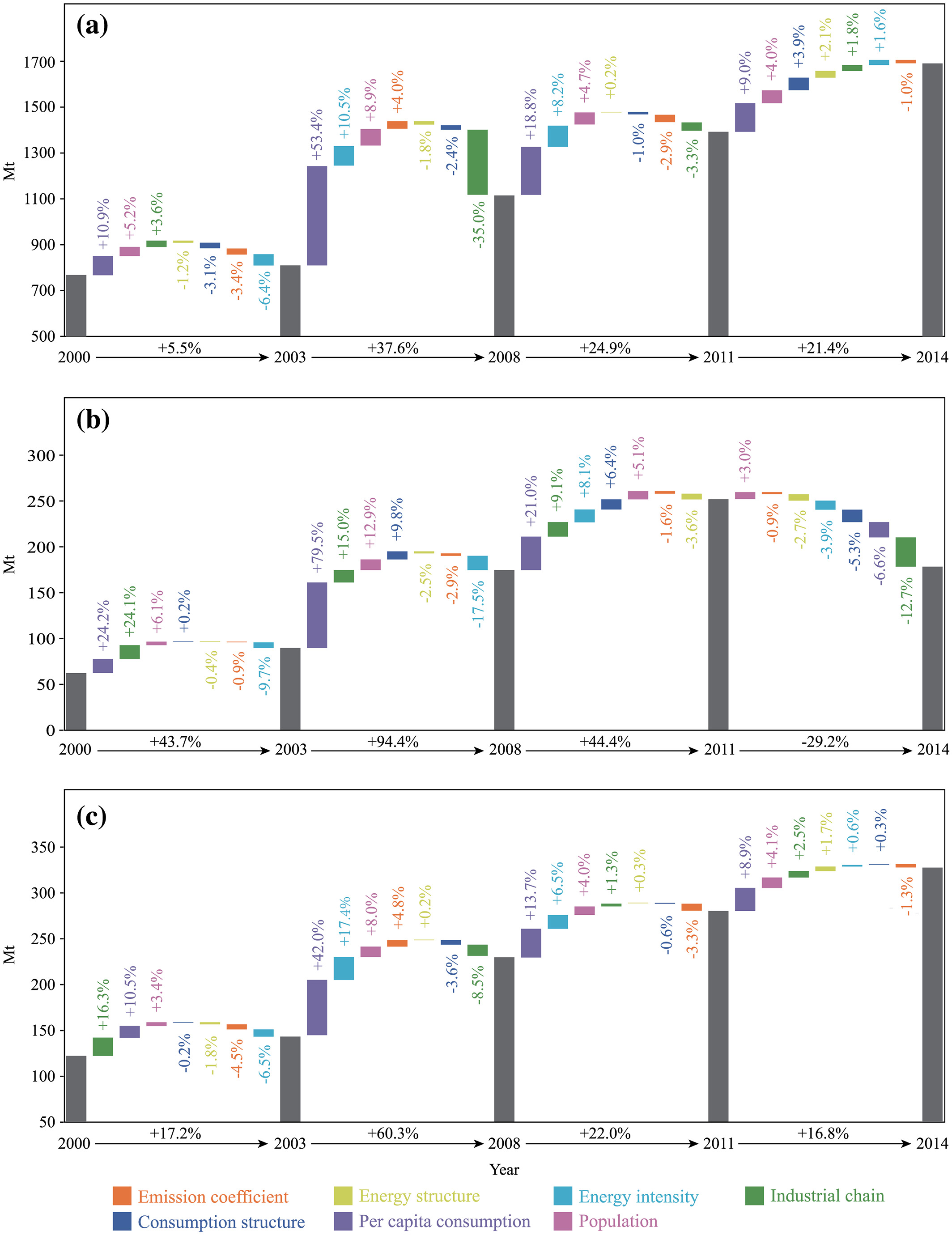
While India becomes one of the largest carbon emitters in the world with a high emission growth rate, existing studies fail to capture the recent trends and the key driving factors behind it. Here, by using multiregional input-output analysis and structural decomposition analysis, we measure the contribution of factors to the changes of India's domestic consumption and trade-related emissions. This study finds that India's per capita co...
-
Production Globalization Makes China’s Exports Cleaner
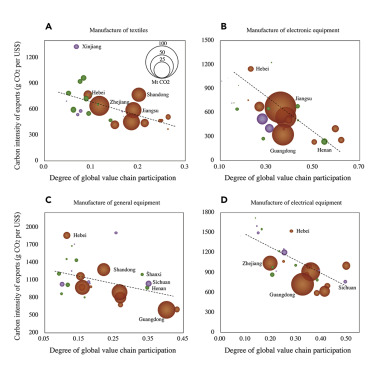
Production globalization, which is when firms expand their supply chains across national boundaries, creates an opportunity for developing countries to engage in international production networks via trade. Described as the world's factory, China specializes in assembly manufacturing mainly through processing exports. Firms use imported intermediate inputs for production and, after processing or assembly, re-export the finished products ...
-
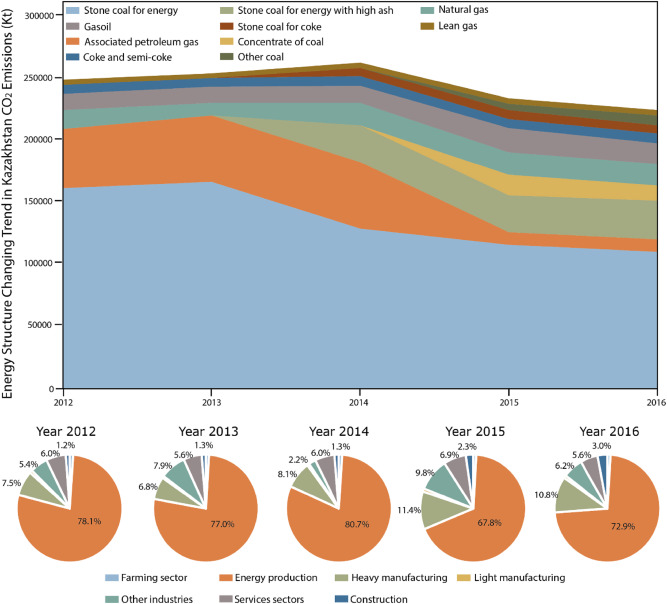
Kazakhstan's CO2 emissions in the post-Kyoto Protocol era: Production- and consumption-based analysis
The first commitment period of the Kyoto Protocol came to an end in 2012 and more developing countries began to participate in the new phase of world carbon emission reduction. Kazakhstan is an important energy export country and a pivot of the “Belt and Road Initiative” (BRI). Despite its emissions are relatively small compared with huge emitters such as China and the US, Kazakhstan also faces great pressure in terms of CO2 emission...
-
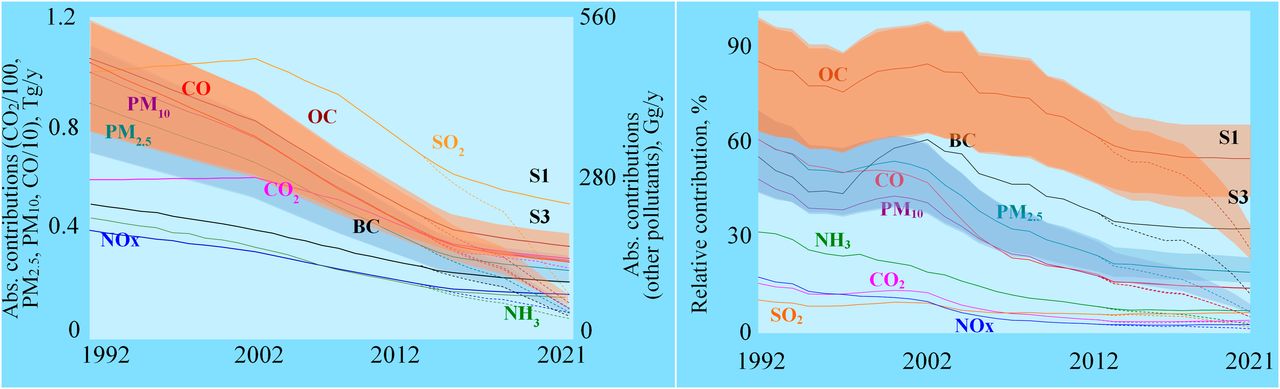
Energy and air pollution benefits of household fuel policies in northern China
In addition to many recent actions taken to reduce emissions from energy production, industry, and transportation, a new campaign substituting residential solid fuels with electricity or natural gas has been launched in Beijing, Tianjin, and 26 other municipalities in northern China, aiming at solving severe ambient air pollution in the region. Quantitative analysis shows that the campaign can accelerate residential energy transition si...
-
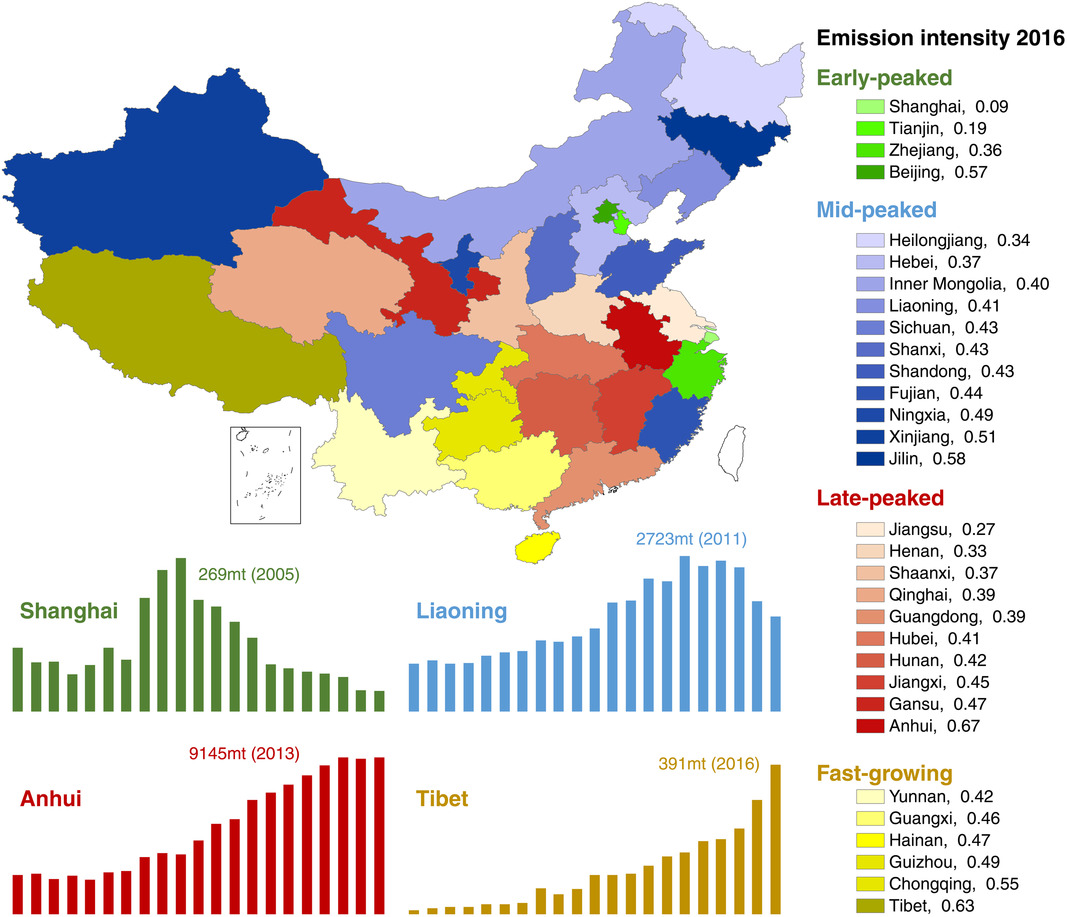
Peak cement‐related CO2 emissions and the changes in drivers in China
In order to fight against the climate change, China has set a series of emission reduction policies for super-emitting sectors. The cement industry is the major source of process-related emissions, and more attention should be paid to this industry. This study calculates the process-related, direct fossil fuel–related, and indirect electricity-related emissions from China's cement industry. The study finds that China's cement-related ...
-

CEADs collaboration: Quantifying ship carbon emissions within the high seas and analyzing mitigation me
Introduction A research collaboration led by Professor Shouyang Wang’s team at the Academy of Mathematics and Systems Science, Chinese Academy of Sciences, together with the CEADs team, recently published “The Climate Impact of High Seas Shipping” in National Science Review. The co-first authors are PhD candidate Yuze Li from Boston University’s Questrom School of Business, Professor Peng Jia from the Collaborative Innovation Ce...
-

CEADs Research Offers a New Perspective on Global Climate Change Mitigation
Background Carbon dioxide emissions from fossil fuels (hereinafter referred to as "carbon emissions") are one of the main drivers of global warming. In the past, governments and academia mainly focused on major emitting countries with large economies and populations, while paying relatively little attention to the carbon emissions of many small and medium-sized emerging economies. Recently, the International team led by Professor DaBo G...
-
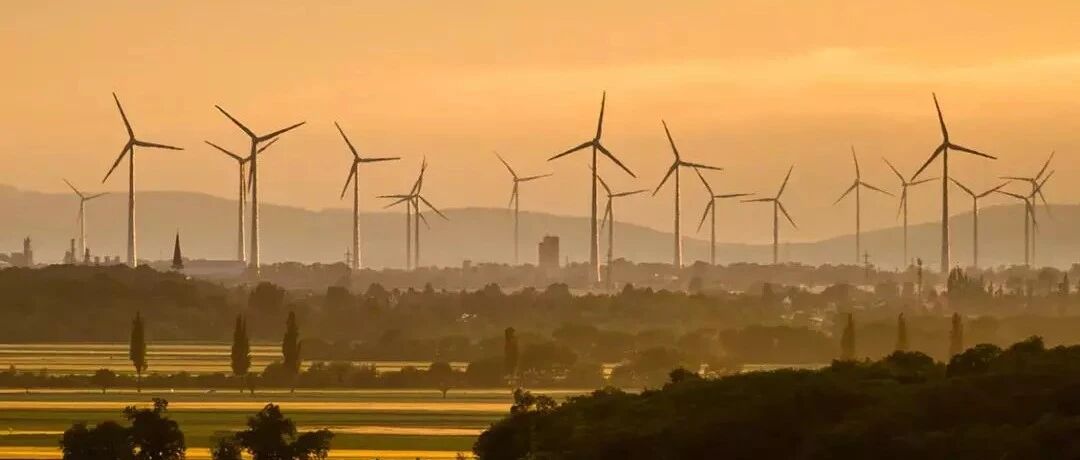
CEADs Research: The Role of Energy Policies in the Energy Transition of Asia-Pacific Emerging Economies
Research Background Energy transition in Asia-Pacific emerging economies Emerging economies are shaping economic growth and energy consumption, and they are playing an increasingly important role in the global landscape. The Asia-Pacific (APAC) region has recently been one of the most dynamic regions in global economic development and energy demand, yet its clean energy transition has lagged behind. Emerging economies, which account for...