
Climate Risk Assessment and Adaptation
-
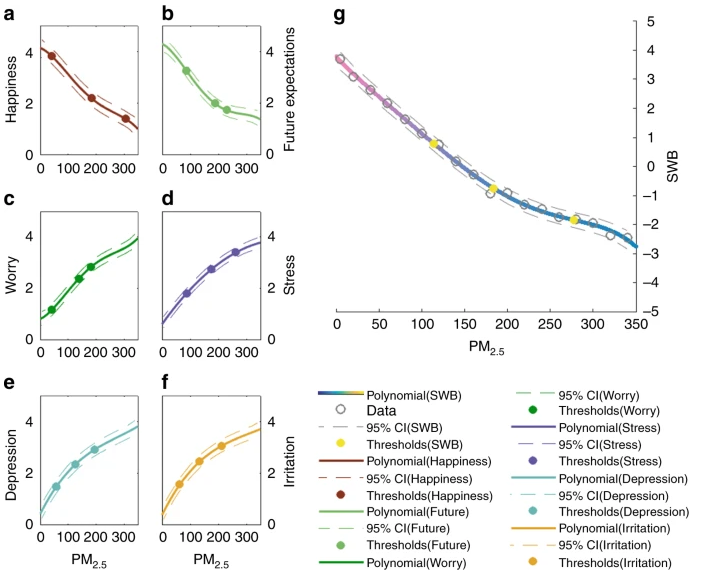
A psychophysical measurement on subjectivewell-being and air pollution
Although the physical effects of air pollution on humans are well documented, there may be even greater impacts on the emotional state and health. Surveys have traditionally been used to explore the impact of air pollution on people’s subjective well-being (SWB). However, the survey techniques usually take long periods to properly match the air pollution characteristics from monitoring stations to each respondent’s SWB at both disag...
-
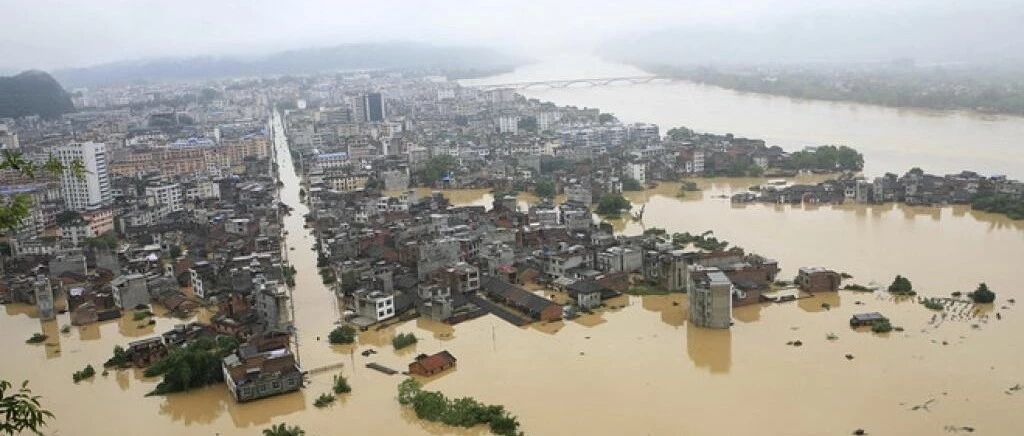
CEADs Research: Developing a Flood Footprint Accounting Framework to Quantify the Indirect Economic Imp
As global climate change intensifies and urbanization advances rapidly, natural disasters triggered by extreme weather and climate events are appearing more frequently in human society, bringing non-negligible impacts on production, daily life, and socio-economic development. However, the economic impacts of natural disasters most familiar to the public are largely direct impacts, namely the loss and damage of fixed assets such as resid...
-

CEADs Research: Quantifying the Relationship Between Air Pollution-Related Health Impacts and Household
According to estimates by the World Health Organization, PM2.5-related air pollution causes more than 1 million premature deaths in China each year. Direct household consumption of fossil fuels in daily life by urban and rural residents (for cooking, heating, travel, and other activities) is an important source of air pollution in China. Meanwhile, air pollutant emissions embodied in the products and services consumed by households (tha...
-
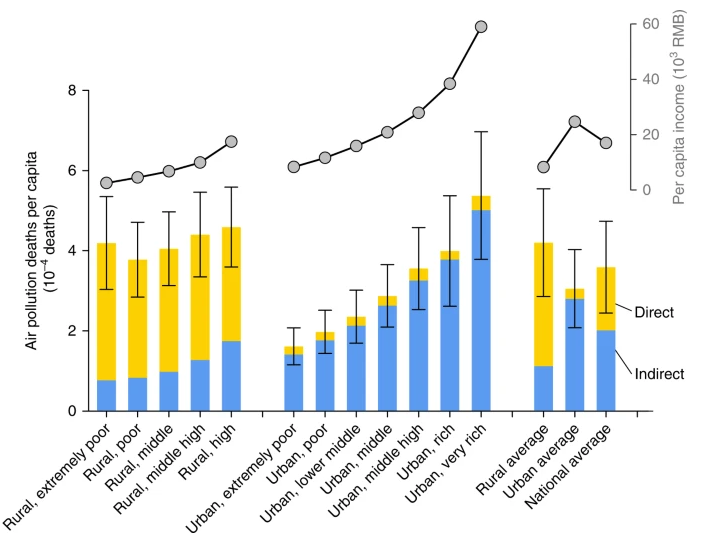
Inequality of household consumption and air pollution-related deaths in China
Substantial quantities of air pollution and related health impacts are ultimately attributable to household consumption. However, how consumption pattern affects air pollution impacts remains unclear. Here we show, of the 1.08 (0.74-1.42) million premature deaths due to anthropogenic PM2.5 exposure in China in 2012,20% are related to household direct emissions through fuel use and 24% are related to household indirect emissions embodied...
-

Three CEADs Team Studies Featured in the Inaugural Issue of One Earth
1 Grand Challenges Cannot Be Treated in Isolation Reducing poverty, protecting the environment and mitigating climate change are among the major challenges facing the world. As real-world problems become increasingly prominent, people are also becoming more aware that different issues are interconnected and interact with each other. For example, developing industrial production to improve living standards and create jobs may also intens...
-

CEADS Collaboration: Assessing the Impacts of Global Trade on Climate Change over the Tibetan Plateau
As the largest store of ice and snow after Antarctica and the Arctic, the Tibetan Plateau is the main source of freshwater for more than 20 % of the global population and is known as the Asia Water Tower. In recent decades, under the influence of climate change, the Tibetan Plateau has warmed at more than twice the global average rate, and its glaciers have shown a rapid retreat trend. Studies indicate that a 1.5°C rise in global tempe...
-
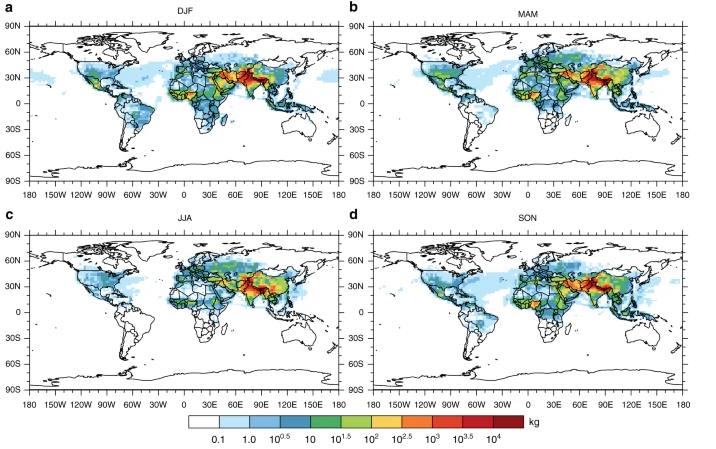
The cascade of global trade to large climate forcing over the Tibetan Plateau glaciers
Black carbon (BC) aerosols constitute unique andimportant anthropogenic climate forcers that potentially accelerate the retreatof glaciers over the Himalayas and Tibetan Plateau (HTP). Here we show that alarge amount of BC emissions produced in India and China-a region of BCemissions to which the HTP is more vulnerable compared with other region-arerelated to the consumption of goods and services in the USA and Europe throughinternationa...
-

CEADS Study: Air Pollution Emission Reductions Were Decisive for Recent Air Quality Improvements in Bei
To improve air quality, the Chinese government issued the Air Pollution Prevention and Control Action Plan in 2013 (the "Air Ten Measures"), which required Beijing to reach an annual average PM2.5 concentration of 60μg/m3 by 2017. To meet this challenging target, Beijing and surrounding regions successively implemented a series of air pollution control policies. Regional air quality improved rapidly, and the annual average PM2.5 concen...
-

CEADs Collaboration: Nature Sustainability Article Discusses Human Impacts on Temperature Seasonality
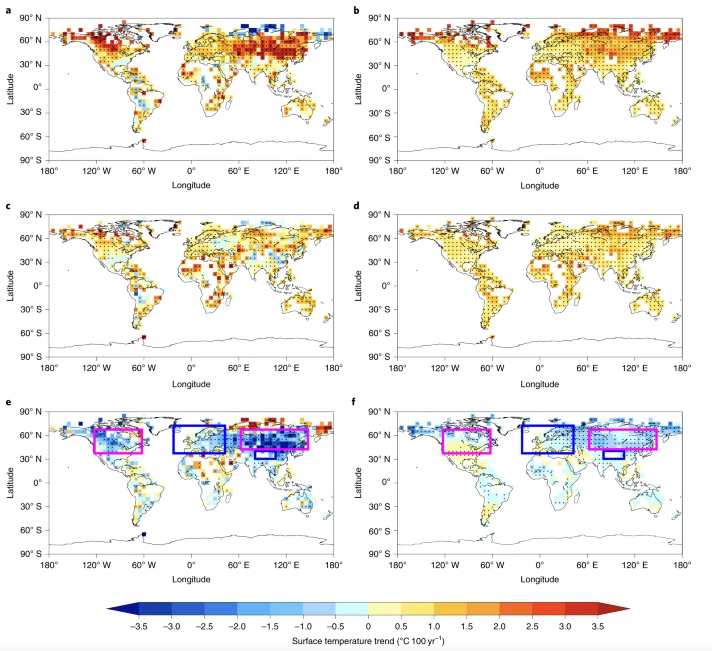
Climate change has already had important impacts on the human living environment. Attribution of climate change is not only an important scientific question, but also an important scientific basis for international climate negotiations. In recent years, however, most related studies have focused on the period covered by instrumental observations in recent decades, and attribution studies have mainly addressed warming trends and individu...
-
Detection of human influences on temperature seasonality from the nineteenth century
It has been widely reported that anthropogenic warming is detectable with high confidence after the 1950s. However, current palaeoclimate records suggest an earlier onset of industrial-era warming. Here, we combine observational data, multiproxy palaeo records and climate model simulations for a formal detection and attribution study. Instead of the traditional approach to the annual mean temperature change, we focus on changes in tempe...