
Carbon Emissions Accounting
-

CEADS Collaboration: Embodied Carbon Emissions of International Migration from 1995 to 2015
Today the internationally renowned journal Environmental Science Technology officially published the research article CO2 Emissions Embodied in International Migration from 1995 to 2015 . The paper was completed through collaboration among teams from Guangdong University of Technology, Fudan University, Tsinghua University, Beijing Normal University, and the University of East Anglia. Liang Sai of Guangdong University of Technology is t...
-

CEADs collaboration: Analysis of environmental-social-economic footprints embodied in trade within and
On September 8, 2020, the internationally renowned journal Nature Communications published online a research article titled Environmental-Social-Economic Footprints of Consumption and Trade in the Asia-Pacific Region . The study innovatively constructed a sustainable development footprint indicator system from three dimensions, natural resources, local and global environmental challenges, and socio-economic impacts. Based on a multi-reg...
-
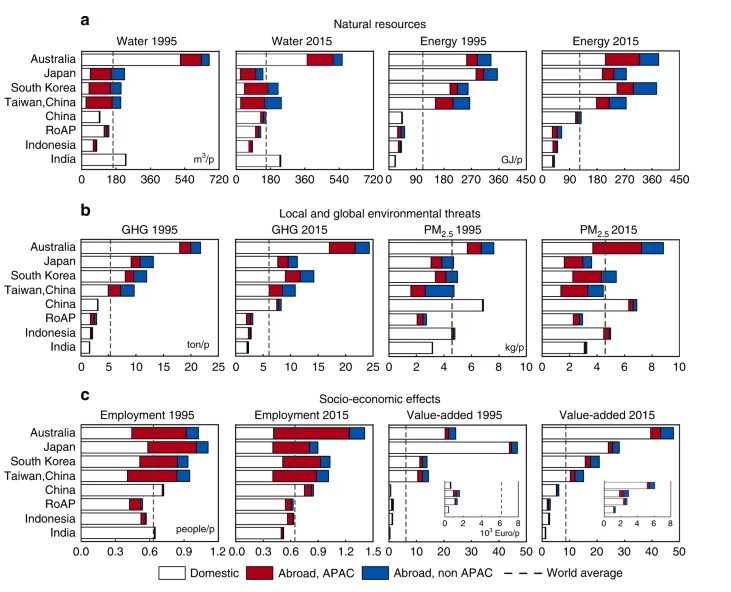
Environmental-social-economic footprints of consumption and trade in the Asia-Pacific region
Asia-Pacific (APAC) has been the world’s most dynamic emerging area of economic development and trade in recent decades. Here, we reveal the significant and imbalanced environmental and socio-economic effects of the region’s growths during 1995-2015. Owing to the intra-regional trade of goods and services, APAC economies grew increasingly interdependent in each other’s water and energy use, greenhouse gas (GHG) and PM2.5 emissions,...
-
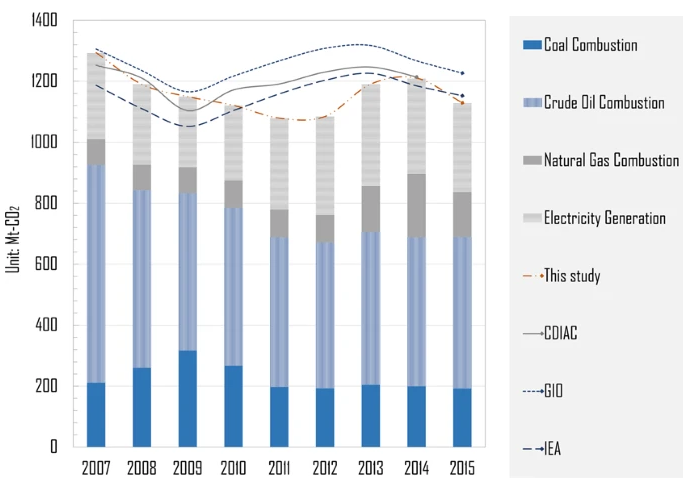
Japan prefectural emission accounts and socioeconomic data 2007 to 2015
In the wake of the Fukushima nuclear disaster, Japanlargely moved away from nuclear power generation and turned back towards anenergy sector dominated by fossil fuels. As a result, the pace towards reachingemission reduction targets has largely slowed down. This situation indicatesthat higher emissions will continue to be generated if there is no appropriateand efficient measurement implemented to bridge the energy demand gap. Tocontribu...
-
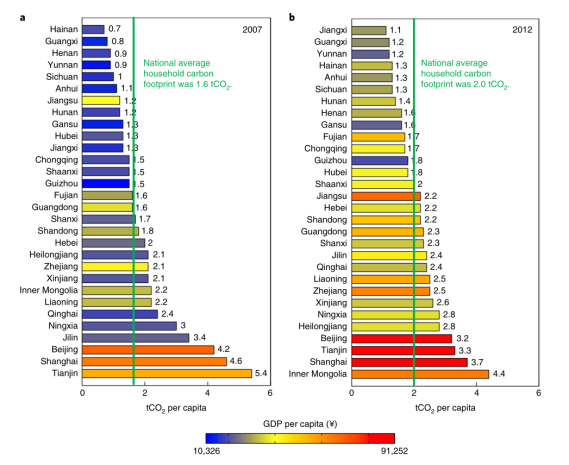
Economic development and converging household carbon footprints in China
There are substantial differences in carbon footprints across households. This study applied an environmentally extended multiregional inpu-output approach to estimate household carbon footprints for 12 different income groups of China’s 30 regions. Subsequently, carbon footprint Gini coefficients were calculated to measure carbon inequality for households across provinces. We found that the top 5% of income earners were responsible f...
-
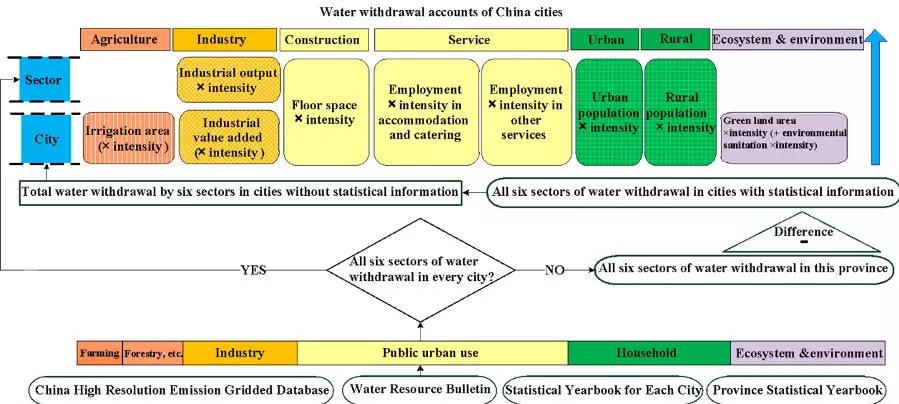
City-level Water Withdrawal in China: Accounting Methodology and Applications
In the context of the freshwater crisis,accounting for water withdrawal could help planners better regulate water usein different sectors to combat water scarcity. However, the water withdrawalstatistics in China are patchy, and the water data across all sectors at thecity level appear to be relatively insufficient. Hence, we develop a generalframework to, for the first time, estimate the water withdrawal of 58economic-social-environmen...
-

CEADs Research: Accounting Methodology and Applications for City-Level Multi-Sector Water Withdrawal in
Freshwater scarcity is a basic national condition in China. About two-thirds of cities face tensions between water demand and supply, which have become an important factor constraining the sustainable development of the economy, society, and environment. Although China implemented the strictest water resources management system in 2011, it was not until December 2017 that cities gradually began installing water meters to comprehensively...
-
A city-level inventory for atmospheric mercury emissions from coal combustion in China
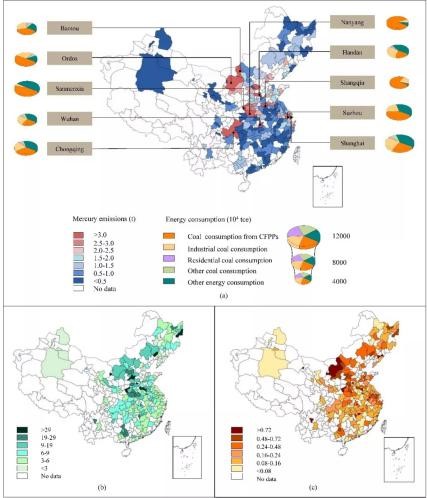
Cities are essential entities for dedicatedmercury control policies. However, the city-level mercury emission inventory asthe cornerstone of proper policy design is still in its infancy, due to dataavailability. For the first time, this study developed a comprehensivecity-level atmospheric mercury emission inventory from coal combustion in Chinain 2010, by updating emission factors based on high-resolution information suchas the plant-s...
-
China CO2 emission accounts 2016-2017
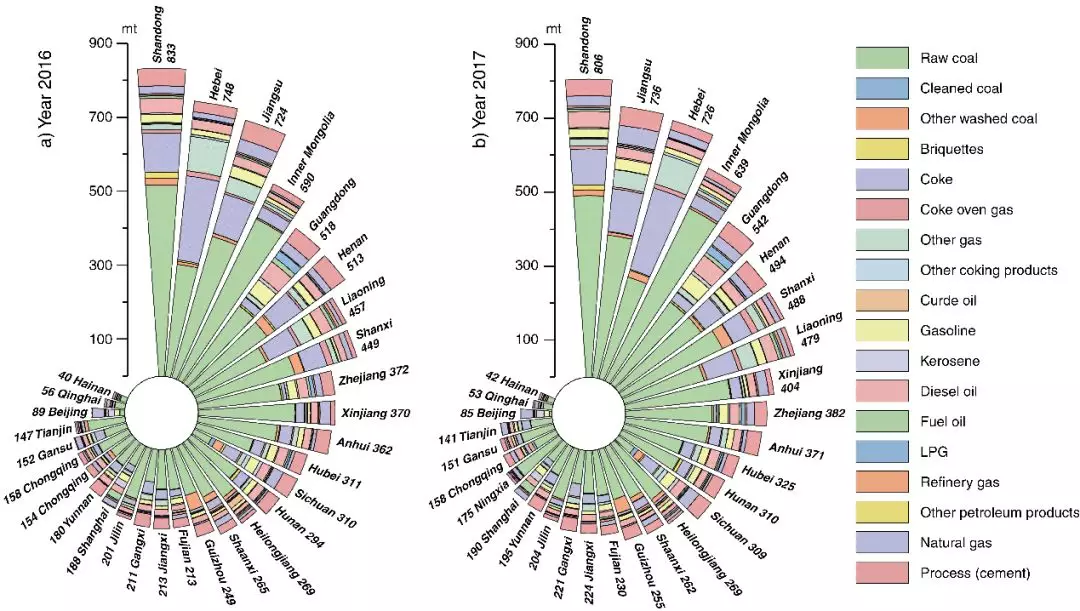
Despite China’s emissions having plateaued in 2013, itis still the world’s leading energy consumer and CO2 emitter, accounting forapproximately 30% of global emissions. Detailed CO2 emission inventories byenergy and sector have great significance to China’s carbon policies as well asto achieving global climate change mitigation targets. This study constructsthe most up-to-date CO2 emission inventories for China and its 30 provinces...
-
CEADs Research: Exploring Atmospheric Mercury Emissions from Coal-Combustion Sectors at the City Level
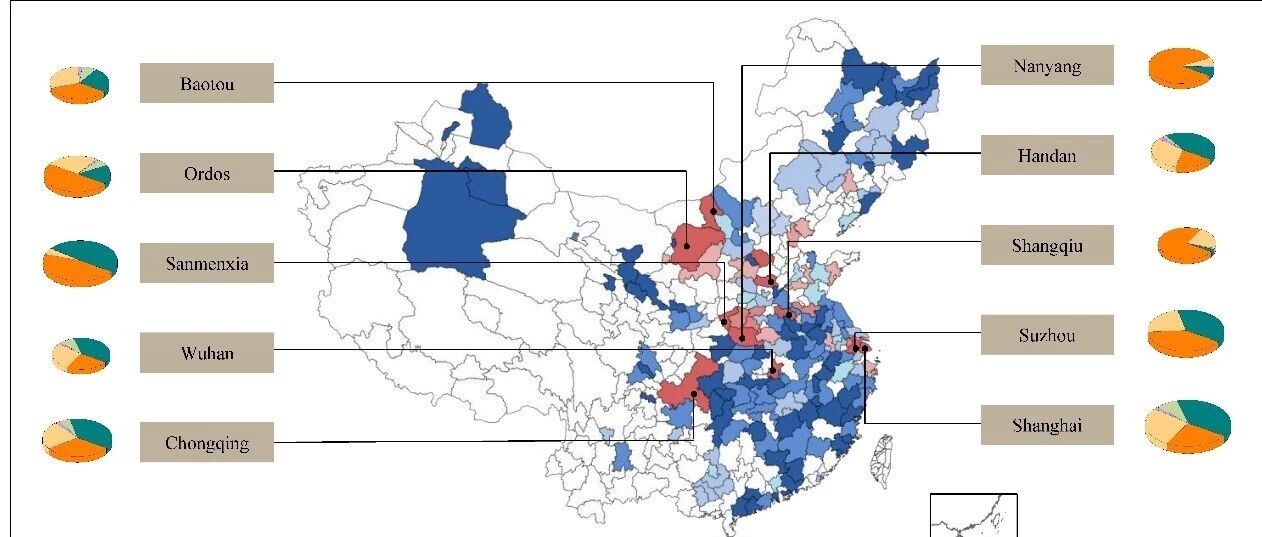
Mercury is a heavy-metal pollutant. Because it can be transported over long distances, bioaccumulates, and is toxic, it poses a serious threat to human beings and the natural environment. As the largest mercury emitter and coal consumer in the world, China derives more than one third of its mercury emissions from coal-combustion sectors. In response to severe mercury pollution, many scholars have worked to compile mercury emission inven...